PM Pledges to End “Decades of Political Drift” on Social Care
Prime Minister Andy Burnham has vowed to fix England’s broken social care system, announcing an accelerated timetable for the National Care Service commission and a new cross-party push to tackle reforms that successive governments have “ducked for too long.”
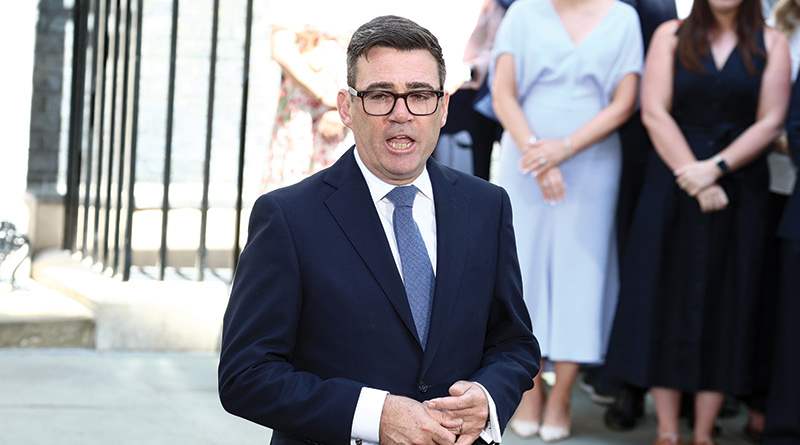
Speaking at a care home this morning (July 29), the Prime Minister set out his determination to bring the political will needed to confront long-standing problems in social care, calling for an end to point-scoring between parties in favour of genuine problem-solving.
“I won’t stand by and leave people paying the price for Westminster’s refusal to deal with the real issues facing our country,” Mr Burnham said. “That’s what’s happened with our broken social care system, which has been left to decline while politicians pass it back and forth.”
He added: “I just don’t accept that this problem is too big to solve. What we need is a new way of doing politics where we come together, face the challenge head on and build an integrated system that gives people security and dignity.”
Cooper: “too many” being let down
Health and Social Care Secretary Yvette Cooper backed the Prime Minister’s intervention, warning that older and disabled people, along with millions of unpaid carers, continue to be failed by the current system.
She invoked the legacy of Barbara Castle, who recognised more than 50 years ago that health and social care must operate hand in hand, and said the government was determined to succeed where previous administrations had struggled.
Pressure on the NHS
The announcement placed particular emphasis on the knock-on impact of social care shortfalls on NHS capacity. Government figures cited show A&E attendances among the over-65s have risen from 3.3 million in 2011/12 to 5.8 million in 2024/25, with cuts to social care funding between 2010 and 2018 estimated to have driven around half a million additional A&E attendances a year among that age group.
Thousands of patients remain in hospital beds despite being medically fit for discharge, the government said, largely due to a lack of capacity in adult social care — a bottleneck that has contributed to rising instances of corridor care.
Workforce and integration
The Prime Minister said his immediate priority would be strengthening the social care workforce and integrating it more closely with NHS staff, with a focus on clearer progression routes, improved pay, better training and greater job security.
Big Conversation on Care launched
To bring the public into the process, Baroness Casey has launched the “Big Conversation on Care”, a new online platform inviting people across the country to share their views on the values, principles and difficult questions of fairness and funding that any reformed system must address.
Ms Cooper will chair a new ministerial group to accelerate the government’s response across workforce, system reform and delivery of the Casey Commission’s first recommendations, including work towards appointing a Dementia Tsar later this summer.
Commission timetable brought forward
In a significant move, the Prime Minister confirmed that Baroness Casey’s commission — tasked with drawing up a plan for a National Care Service — will now report back next summer, a year earlier than the original 2028 deadline.
The commission’s findings will aim to secure public backing and cross-party consensus, with the government stressing that any proposals must be deliverable, realistic and designed around the people the system serves.
Core principles
The Prime Minister outlined four principles that will underpin the future National Care Service:
• People must be able to move seamlessly between hospitals, home care and community services
• The service must be fully and sustainably funded
• Reform must start with prevention, helping people live independently for longer
• Citizens’ needs must sit at the heart of the system, removing budget battle lines between organisations so that social, primary and community care work effectively together
Cross-party talks to begin
Mr Burnham and Ms Cooper will meet regularly with Baroness Casey and her team to track progress. The Prime Minister has also invited the leaders of the two main opposition parties to meet with him to begin cross-party discussions, marking what he described as the start of a new approach to resolving the issue.