People with Learning Disabilities Support Marie Curie to Update End of Life Care Resources
People with learning disabilities have been supporting a leading end of life charity to create new accessible resources around the topics of terminal illness, death, dying and bereavement – after research found they are often not involved in conversations about the subject or told when someone close to them will die.
Marie Curie first launched its easy read booklets back in 2017, but has now updated these and added online resources, photo books and videos to further support having conversations around palliative and end of life care with people with a learning disability and those who may need additional support to understand or process information.
The information in the resources has been stripped right back to include crucial points only. These points use jargon-free, straightforward language and are presented alongside clear pictures in the order that makes most sense to the reader.
People with a learning disability may face particular challenges if they, or someone close to them, come to need palliative and end of life care. They may experience poorer quality care, because their specific needs are not always understood or fully considered; and may find it difficult to cope with adverse events, like death and grief.
Research also found that people with a learning disability are often excluded from these topics. This includes not being involved in conversations about death and dying, not being told someone close to them has died, and being left out of conversations about terminal illness, its progression, and what to expect.
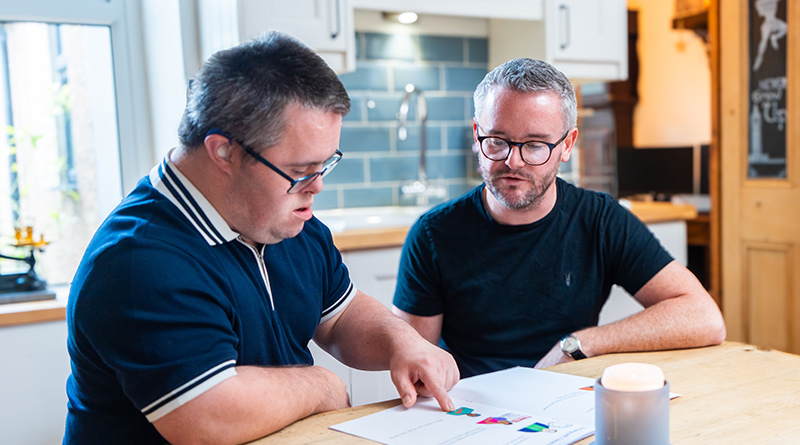
Sam Clements supported his brother Harry through the death of their father with honest and open conversations – with the pair since supporting the charity with these updated resources.
Sam, who is also Associate Director of Nursing and Quality at Marie Curie, said: “I think it’s important to have these conversations with everyone, but particularly with people who are living with additional needs or learning disabilities and I think the most important thing for us was avoiding softening or sugar coating the situation.
“We were really cautious not to use language like he’d gone to sleep because we didn’t want to cause more confusion or cause any worry around sleeping because that’s not what happened – he didn’t go to sleep, he died.
“So, it’s being very clear around the words that were used and just having that really honest communication.”
Harry said: “I have good memories (of dad). We went on holidays. We played in the pool and he held me. Good times. Dad loved me. He was proud of me.
“(When he died) it was hard to be strong. But we visit his grave. We remember him. I sing hymns and light candles. It was difficult to understand, but people helped me. Talking helped. My mum, nan and Sam and my whole family.”
Harry and Sam feature in the Marie Curie photo books and videos, as does Sue Taylor whose dad also died.
Sue said: “It was confusing time to me because I thought it can’t be my father had died. It can’t be. It was a shock to me. My mum didn’t go into it, because they didn’t want to upset me, and in those days there was no explaining about it – there was no leaflets about it to get you to understand about it.”
Some people with a learning disability may not have been involved in decision making or given opportunities to make their own choices, so there may be additional things to consider when it comes to discussions around end of life, to help people develop an understanding and be prepared for what to expect. In cases like this, it is particularly important to make sure that people have access to clear information in their preferred format, to enable further conversations and involvement.
Charlotte Lindley, Marie Curie Head of Information and Support and Companions, said: “For most people, talking about death and dying is difficult. There is a lot of information to digest and everyone has the right to information in the form that suits their needs.
“The more open we are about death and dying, the more time people have to discuss their needs and concerns. Having access to straight-forward information that enables straight-forward, jargon-free conversations could benefit anyone struggling to come to terms with a terminal illness.
“It’s important to remember that someone who has a learning disability will make better informed decisions about their care and treatment, if explanations they need come in the correct form.”
The Marie Curie Palliative Care Knowledge Zone also has free and easy to access online resources for professionals who are caring for people with learning disabilities at the end of life, or who knows someone who is dying or has died.