Burnham to Scrap Pensions Triple lock to Fund Free National Care Service
Prime Minister Andy Burnham has said he will pay for a new national care service by ending the state pension “triple lock”.
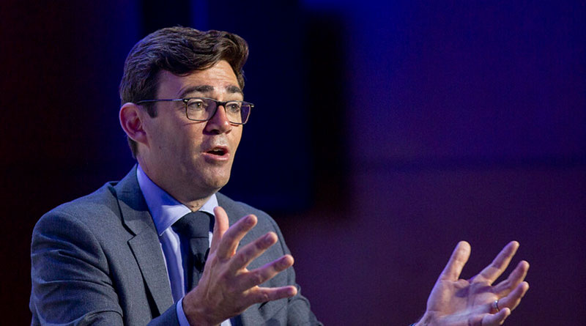
Addressing Labour’s annual conference, he confirmed that a care system free at the point of use would be central to the party’s platform at the next general election, which must be held by 2029.
Burnham first unveiled the idea during a BBC interview with Laura Kuenssberg on Sunday. His conference speech went further, setting out part of how the government would meet the cost.
Under the triple lock, the state pension rises each year by whichever is highest of price inflation, average earnings growth or 2.5%. Burnham proposed changing the formula so that annual increases are linked to inflation or 2.5%, while ensuring pensions keep pace with earnings growth over the longer term.
He told delegates the change would release substantial savings, which the government would channel into the new service.
A service built around home
Burnham described the planned service as person-centred and high quality, with care beginning in people’s own homes. He said everyone would pay into the system and everyone would be covered, and that care charges would no longer be taken from the basic state pension.
He said the aim was a system driven by people rather than profit, giving families reassurance about care in later life, safeguarding homes and savings, and properly recognising the workforce that so many will depend on.
Industry Reaction
Andrew Pike, Deputy Director of Campaigns, Policy and Public Affairs at Dementia UK said: “A revolution in social care delivery to offer person-centred, high-quality care could improve the lives of millions of people affected by dementia in England, but families are exhausted and need change to start now.
“The Prime Minister’s ambition to “rip off the plaster” and tackle long-standing failings within social care, alongside the recommendations made by Baroness Casey’s Commission, represent a vital opportunity to deliver lasting improvements to dementia care.
“We hear every day from people who are left to navigate a broken system which too often places the responsibility of care onto families. Any new model of care must involve joined up health and social care for people affected by dementia and their families, to finally deliver the coordinated and proactive support from diagnosis through to end of life that is so desperately needed.”
Dr Jennifer Dixon, Chief Executive of the Health Foundation, said: ‘The Prime Minister’s pledge to fundamentally reform social care in England provides a generational opportunity to create a fairer, more generous system for older and disabled people, their families and carers. The changes implied by Burnham would be substantial.
‘The current system is a threadbare-safety net in desperate need of reform. Too many people go without the care they need, deplete their savings to pay for it, or rely heavily on unpaid support from friends and family. Care workers are poorly paid and many live in poverty. A more generous system that pools risks across the population and values social care as an essential public service is needed to fill a glaring gap in our welfare state.
‘Difficult questions and trade-offs will follow – not least how reform will be funded and how costs will be shared. While it’s not yet clear what will be included in the state’s offer under a new national care service, additional public investment will be needed to deliver a fairer and more universal system. But the cost of continued inaction to people and their families is severe and an overwhelming majority of the public support the principle of a greater role for the state in funding social care.
‘Sustained political leadership from the Prime Minister is now needed to deliver the prize on offer – and other political leaders will need to rise above party politics to give reform the cross-party support it needs. The shared challenge is how to turn the positive vision that the Prime Minister has set out into a reality for the people who depend on social care.’
Nuffield Trust Deputy Director of Policy Natasha Curry said: “To have a Prime Minister bringing this much passion and commitment to reforming social care is hopeful after decades of neglect. If Burnham’s vision sets us on a path for a national care service that is free at the point of use, it could see us going from one of the most threadbare systems in the developed world to one of the most generous. The amount of funding needed will depend heavily on exactly what is in and what is out of any public offer. Even Denmark, which has a very generous system, charges people for accommodation costs.
“But Burnham needs to be crystal clear about who stands to gain from the changes he’s proposing. Today’s speech leaves us with important questions unanswered over exactly how the system he envisages would compare to what we have now, who can expect to receive ‘free’ care, and what types of support are included. With the focus on pensioners, working aged adults who rely on care services will be wondering whether they will benefit.
“Burnham needs to tread carefully. Ploughing ahead with major changes too early might risk undermining Baroness Casey’s Commission and the ‘public conversation’ about social care. Burnham recognises the need to build consensus and settle what we as a society want social care to do before deciding the fairest way to fund it. Yet not taking any action at all to begin reforms before the next election risks leaving the sector to languish further.”