
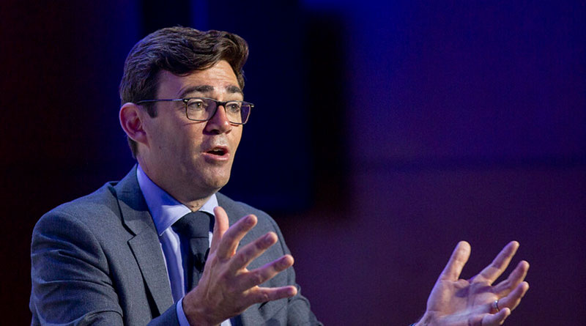
Andy Burnham Calls for Action on Social Care as He Takes Over as Labour Leader
Picture Credit: Flickr/Faruk Pinjo/World Economic Forum under CC BY-NC-SA 2.0
Andy Burnham has been officially declared leader of the Labour Party, clearing his final hurdle to become Prime Minister, and used his first speech in the role to place social care reform at the heart of his agenda.
The former Mayor of Greater Manchester was the sole contender to replace Sir Keir Starmer, who stepped down following a Labour backbench rebellion. Burnham’s confirmation as leader on Friday was a formality after he secured nominations from 379 of the party’s 403 MPs, and he is expected to formally take office as Prime Minister next week.
Addressing an audience of MPs, party activists and trade union leaders, Burnham pledged to “have the courage to fix the big things that politics has neglected, like social care, and have the conviction to go out there together and argue for our plans.”
He added: “Let’s have the self-confidence to find common ground with other parties where we can. By seeking more consensus, we may just find the change we make is more lasting. We may find our political discourse in this country becomes that little bit less toxic, and we should be working to achieve that too.”
The speech has been widely welcomed by leading figures across the care and dementia sectors, who see it as a signal of intent on long-awaited reform.
Sector reaction
National Care Forum CEO Professor Vic Rayner OBE said: “It is fantastic to hear our future Prime Minister place social care front and centre of his plans and give it such a prominent place in the political landscape.
Andy Burnham is absolutely right to prioritise social care in his speech today. It will give rightful hope to the millions of people that draw on care and support, unpaid carers and those who provide social care that we have a leader who sees and hears the pressures they have been facing each and every day. The courage and conviction he has called for provide a clarion call for a commitment across government and political parties to deliver meaningful reform.”
Professor Rayner said a future National Care Service must be built on four foundations:
• Not-for-profit care and support at its heart
• Investment in the social care workforce to ensure staff are properly valued
• Adoption of new technology and innovation, making care both smarter and greener
• A system that embeds rights, fairness and choice for people who draw on care
She added: “Not-for-profit providers are embedded in communities and deliver support that is rooted in local relationships, accountability and social purpose. As government considers greater devolution and the development of a National Care Service, the not-for-profit sector is uniquely placed to help deliver reform that combines national ambition with strong local leadership and community connection. NCF stands ready to work with Andy Burnham and his government to help make a National Care Service with not-for-profit care at its heart a reality.”
Michelle Dyson CB, Chief Executive of Alzheimer’s Society, said Burnham’s own family experience of Alzheimer’s disease lent particular weight to his commitment to reform: “Andy Burnham has spoken about his family’s experience of Alzheimer’s disease and his promise to pursue reform offers hope. We are looking forward to working with the new Prime Minister and his Government to deliver the bold action needed on dementia.”
She added: “Dementia is the UK’s biggest killer, yet it has been overlooked for far too long. With the Modern Service Framework for Dementia and Frailty and the Casey Commission underway, it is critical that the new Prime Minister seizes this moment to transform diagnosis, care and support. Dementia doesn’t wait, and neither should Government. Andy Burnham now has a real opportunity to make dementia a national priority and deliver the change people affected by dementia have waited too long to see.”
Sarah Woolnough, Chief Executive of The King’s Fund, said: ‘We welcome the Labour leader’s commitment to fixing adult social care.
‘This will go a long way to raising the profile of the issue and give a government the opportunity to bring the country with them in their argument for reform. It is a mission statement that should galvanise the social care sector and give hope to all those who are in or have had to deal with this broken system that change might finally be coming.
‘It will also be a benchmark against which his government will be measured.’