
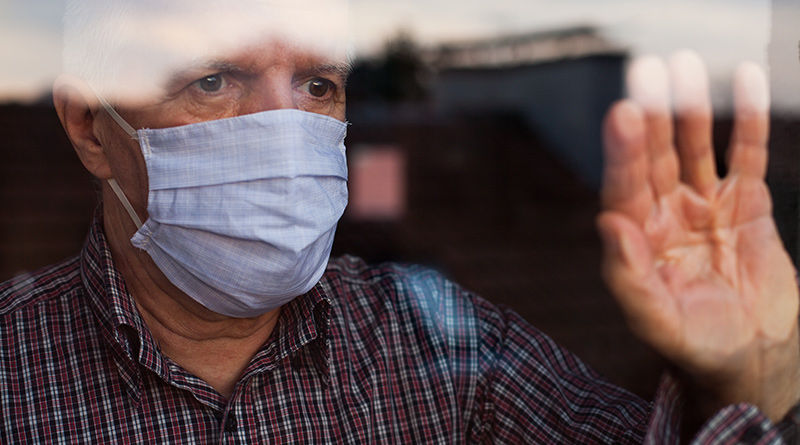
1.8 Million People Still Vulnerable to Covid 19 Face a Mental Health Crisis
Levels of depression and anxiety remain high and largely unrecognised among an estimated 1.8 million clinically vulnerable people in the UK, many of whom continue to live significantly restricted lives to protect them from Covid 19, according to new research from the University of Bath.
The research – a collaboration between psychologists and political scientists at the Universities of Bath and Liverpool – reveals widespread and enduring psychological distress among people who remain isolated more than six years after the onset of the pandemic.
The study was led by Anna Gray, a trainee clinical psychologist at the University of Bath.
She said: “The psychological impact of extended social isolation is profound. For many, this has been compounded by restricted access to medicines, healthcare and a sense of being forgotten and left behind by wider society. These experiences have not ended with the pandemic – they are ongoing.”
Co-author Dr Luca Bernardi from the Department of Politics at the University of Liverpool, added that people’s experience of restriction has not ended, and “trust in government and feelings of representation among immunocompromised people are hard to recover.”
The findings, published in the journal Health Expectations, are based on a national survey launched in 2023 to capture the lived experiences of those still shielding, and focused on 457 immunocompromised or otherwise clinically vulnerable individuals.
The researchers identified a vicious psychological cycle in which fear of infection drives withdrawal from social contact, reducing confidence to re-engage with the world and reinforcing isolation and avoidance.
Participants frequently reported confusion and frustration around inconsistent, unclear or inadequate guidance, contributing to growing mistrust and a shift towards managing risk alone and at personal cost.
The researchers argue that as the risk of emerging infectious diseases increases, these experiences must inform both immediate support measures and longer term pandemic planning.
Dr Jo Daniels, senior author and researcher in the Department of Psychology at the University of Bath, said: “At the start of the pandemic, few of us expected that there would still be a physically and psychologically vulnerable group largely confined indoors more than six years later, carrying such an extraordinary personal burden. But there is – and we must do better to address their needs now, and in future pandemic responses.”
Findings of the new study will be presented to the All Party Parliamentary Group (APPG) for Vulnerable Groups to Pandemics. This will be the second time the researchers have submitted research evidence to Parliament on the psychological impact of shielding. Dr Daniels has also submitted evidence to the ongoing UK Covid 19 Inquiry.