Why I Created MiCode
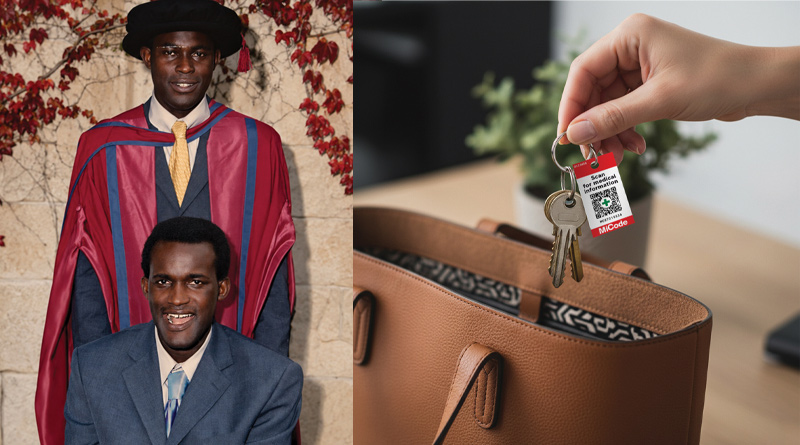
My brother Anthony lived with multiple sclerosis. He was not “an MS patient” to me. He was my brother. He had his own personality, humour, frustrations, hopes and ordinary routines. Like anyone living with a long-term condition, he wanted to get on with life and not be defined by illness.
But when someone you love has a serious condition, there is a quiet fear that sits in the background. You may not speak about it every day, but it is there.
What happens if they become unwell when you are not with them? What happens if they fall, get confused, cannot explain their condition, or need help from someone who knows nothing about them? Would that person know who to contact? Would they know about medication, allergies, communication needs, or the small but vital details that make care safe and personal?
After Anthony died, those questions stayed with me.
A Shift in Perspective
I also had cancer myself, and that changed how I thought about medical information. When you are well, a list of medication or an emergency contact number can seem like admin. When you are ill, those details become something else entirely. They become part of your safety. They become part of how quickly someone can understand you, support you and contact the people who matter.
That is why I created MiCode.
By Professor James Francis Kwame Fah Ohene-Djan PhD, FHEA
MiCode is a QR code designed to store and manage your medical information and emergency contacts. It can be carried on a card, keyring, sticker, bracelet, pendant or phone. If someone needs help, the code can be scanned instantly using any smartphone. No app is needed.
The person with the MiCode remains in control of what information is stored and what is shown. It can include medical conditions, medication, allergies, emergency contacts, communication needs, care instructions, documents, or anything else that may be important in an emergency. It can also work in different languages, which matters in a country as diverse as ours, and for people who travel.
Giving Vulnerable People a Voice
For people with disabilities, long-term conditions, dementia, autism, epilepsy, diabetes, cancer, heart conditions, MS, learning disabilities, sensory impairments or mental health conditions, MiCode can be incredibly useful. In a crisis, people are often expected to explain themselves quickly and clearly. But those are exactly the moments when pain, fear, confusion, shock or illness can make that impossible.
Supporting the Care Network
MiCode gives people a voice when they may not be able to speak for themselves.
It is also very useful for people who are being cared for. So much care depends on knowledge held by other people: a daughter who knows the medication, a husband who knows the hospital consultant, a carer who understands the routine, a support worker who knows how best to communicate. But carers cannot be everywhere all the time.
MiCode helps that essential information travel with the person.
For families and carers, this can bring real peace of mind. It does not remove worry — nothing does — but it can reduce one of the biggest fears: that the person you care for will need help and nobody will know who they are, what they need, or who should be called.
I also wanted MiCode to be affordable. Safety should not be a luxury product. MiCode starts from £20, which I believe is an amazing price for something that can carry such important information and provide such reassurance.
People can get MiCode directly from www.micode.uk. And if anyone has questions, they can always email me personally at james@micode.uk.
MiCode began with Anthony. It also came from my own experience of illness. But it is for anyone who wants to feel safer, more independent and better understood in an emergency. It is a small piece of technology with a very human purpose: helping people be known, protected and cared for when it matters most.