
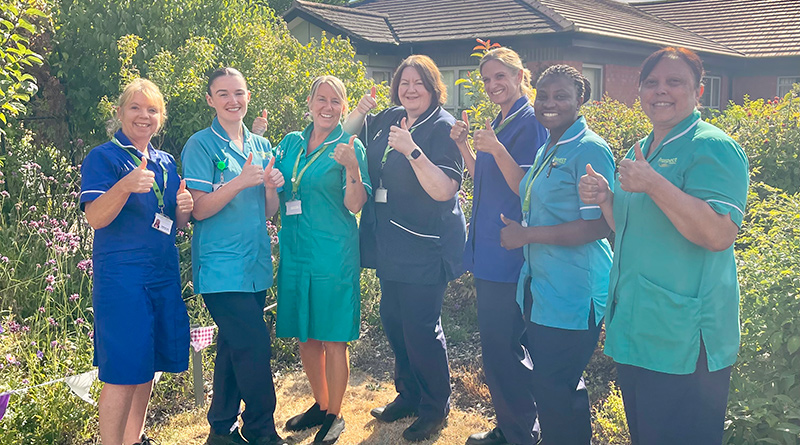
Unprecedented Community Support Enables Prospect Hospice To Expand In-Patient Beds By 50%
Thanks to exceptional and unprecedented support from the local community over the past year, Prospect Hospice, Swindon and North Wiltshire’s dedicated adult hospice providing end of life care, has announced plans to expand its Inpatient Unit (IPU) by 50% by January 2027.
The move will see a total of nine dedicated beds staffed by specialist end-of-life nurses. As a result, it is expected that around 90 more patients each year will be able to receive the personalised care and compassion that Prospect Hospice is renowned for, with their loved ones supported too, both emotionally and practically.
Earlier this year, the charity revealed it was turning away six patients a week due to a lack of funding – a stark example of the financial pressures facing hospices across the country. The need for change is now recognised nationally, with NHS England acknowledging that current hospice funding arrangements are not sustainable, and Prime Minister Andy Burnham putting reform of care funding high on the government’s agenda.
With just 16% of Prospect Hospice’s funding expected to come from government sources annually, the generosity of the local community is vital to ensure that the hospice can provide excellent care in both the hospice and in people’s homes. People support Prospect Hospice in many different ways – from donating and fundraising to shopping in its 17 shops, visiting the hospice café, taking part in events, volunteering their time and supporting through local businesses, corporate partnerships and more.
“It’s just brilliant that we are in the position to increase the number of beds on our IPU,” explained Chief Executive Jeremy Lune. “We’ve been fortunate to have had an unprecedented level of community support in our 46-year history and this is a huge step forward in providing choice and consistency in end-of-life care.
“Turning away dying people is a heartbreaking position to be in, but now, thanks to the positive power of our community, we will be able to give more people the choice they deserve at the end of their lives. We’re incredibly grateful to the people who have dug deep when everyone has been affected by the cost-of-living crisis and not only enabled us to stabilise, but also to grow.
“With an ageing population, the need for specialist care is continually increasing and the NHS 10 year Health Plan rightly places more care into settings like the hospice. So, opening more beds in our IPU also means that our colleagues at Great Western Hospital can use their beds for the purposes they’re designed for, and more people will be able to receive the right care in the right place.
“Each year we care for around 180 people in our IPU, and so from January we expect to be able to accommodate an additional 90. For these people and their families, this will mean an end to uncertainty and the opportunity to have their choice of care and support at the end of their lives. Despite this wonderful news, the hard work isn’t over, as care in our IPU costs over £1,000 a night per person, but we’re incredibly determined to maintain this momentum. That’s why it is so important that hospices are funded fairly. If this did happen, we would be able to open 12 beds, the number our community needs.”
Hospice UK, the organisation that represents the community of more than 200 hospices across the UK, shared Prospect Hospice’s celebration. Charlie King, Deputy Director of External Affairs, said: “It is brilliant news that the fantastic team at Prospect are going to be able to re-open three beds. This is a huge testament to the phenomenal support of the local community. From all of us at Hospice UK, thank you.
With six in ten hospices in England having either made, or are considering cuts to frontline services, Charlie continued: “Across the country hospices have been closing beds and reducing services at an alarming rate in recent years. Rapidly rising costs and insufficient government funding are putting huge pressure on hospice finances, and on their ability to reach more patients with the care they need.
“Time and again, communities step up to plug the gap. This is amazing – but, in the long run, we need government to do the same, to play its part in ensuring a long-term future in which hospice care is there for all who need it.”