How E-Invoicing Can Unlock New Standards For Care Providers
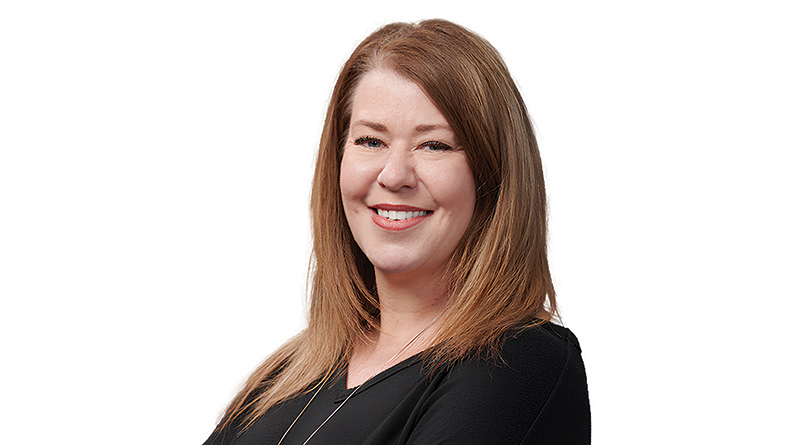
By Sarah-Jayne Martin, Senior Director of Financial Automation, Quadient (www.quadient.com)
The UK has a financial accuracy problem.
According to HMRC’s latest estimates, the tax gap — the difference between the tax expected to be paid and the amount actually collected — stood at £59.2bn in 2024/25. A significant share of that shortfall is down to businesses struggling to keep pace with increasingly complex reporting requirements.
This matters for every sector, but it is especially relevant for care providers. The care sector has historically relied on manual financial processes: paper records, emailed PDFs, spreadsheets, duplicated data entry, and long approval chains. Every organisation will have its own institutional knowledge as to how these things are done.
Such systems may be familiar, but they are no longer fit for purpose. They create more opportunities for mistakes, delays, missing information, and poor visibility. In a sector where margins are tight and staff time is precious, every avoidable administrative burden has an unacceptable human cost.
Why structured invoice data matters
In that context, the 2029 deadline for e-invoicing is actually one of the most important policy shifts for UK businesses in years. Care providers are no exception.
From the April 2029 tax year onwards, organisations will be required to issue invoices electronically, in a bid to move away from the paper-driven processes that have defined the industry for so long.
Instead, new invoices will need to be machine-readable and carefully structured. Rather than a single static document, invoices will become standardised data, flowing directly between the systems that read and process them.
This distinction matters because the invoice is only one part of a much wider workflow. When that information arrives as an unstructured document, each of those stages depends on someone manually interpreting, checking, rekeying, or filing the same data. When it arrives as structured information, those steps can be connected, validated, and automated from the beginning.
Where e-invoicing can ease pressure on care providers
These qualities offer care providers three main benefits from modernising their approach:
1. Automation gives time back to the teams that need it most
If you successfully automate a process, you don’t need a human to oversee every link in the chain. In care homes, this reclaims thousands of hours a year across the workforce. By automating the processing of invoices, care homes can reduce or eliminate repetitive admin that takes time away from the working day. Carers can focus instead on delivering the care that these processes enable, as they take up less time, energy and headspace.
The immediate benefit is simpler, faster invoice processing. But structured, high-quality financial data also creates opportunities over time. As care providers build more digital finance processes, they will be better placed to adopt technologies such as AI-powered forecasting, anomaly detection and workflow optimisation. In that sense, e-invoicing is not just about compliance — it provides a stronger foundation for future innovation.
2. Visibility supports better decisions
Time isn’t just lost in performing these tasks. It’s also lost in reviewing them, working out what the results mean for the business, and assessing how to move forward.
The predictability and searchability of e-invoices allows care homes much more visibility over the entire process, and so dramatically accelerates it. If your cash flow is tight, you can track where it’s gone. If a supplier is failing to pay on time, you can entirely automate the process of flagging their poor conduct. Margins, staffing, and service continuity can be better understood and controlled, in less time than ever before.
Again, care homes can lay the groundwork for AI acceleration by sharing this visibility. The patterns and conversations that can be part of this process could, for example, be fed into a customer communications management (CCM) system to help contextualise and improve customer engagement.
3. Better records mean stronger compliance
This visibility goes beyond the care home. Regulators benefit immensely from this new approach too.
Accurate and consistent records and audit trails are one of the most effective tools for care providers to demonstrate control over their operations. An automated workflow can show what was received, approved, amended, paid, or queried at the stroke of a key.
These trails are exactly what regulators will be looking for in order to meet compliance requirements. Empowering management to deliver on those requirements is yet another means of saving time, stress, and energy that can be directed back into the patient’s experience.
Turning e-invoicing into a more resilient finance process
The lesson is simple: e-invoicing should not be treated as another administrative hurdle for care providers to clear. It should be seen as an opportunity to remove the very friction that has made back-office finance processes so burdensome in the first place.
For care homes, the answer matters far beyond the finance department. Every hour saved on chasing documents, checking invoice details, resolving errors, or preparing records is an hour that can be redirected toward the people who need it most. Better financial workflows can make organisations more resilient, more transparent, and better equipped to manage the demands ahead.
What’s more — modernising now will allow care homes to reap even greater rewards in the future. The data management and standardisation that enables e-invoicing will lay the groundwork for AI functionality, helping care providers step into the future on a sound footing.
The 2029 deadline may still feel some way off, but the organisations that benefit most will not be those that wait until the last moment and do the minimum needed to comply. By the time it passes, e-invoicing will be a foundation for technologies that drive better, faster care.