Exercise as Vital as Medicine for Older People, MPs Say
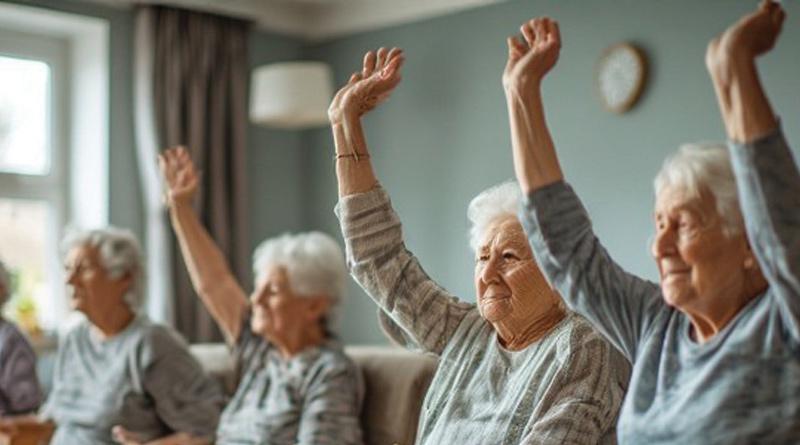
Increasing physical activity among older people to build resilience against illness, frailty and falls will be central to keeping care home residents and the wider ageing population healthier and more independent for longer, according to MPs.
The shift is seen as fundamental to the Government’s drive to move the NHS away from treating illness towards preventing it — and will be critical in helping the care sector manage growing demand while containing the spiralling costs of health and social care funding.
The report follows the cross-party Committee’s Healthy Ageing inquiry.
It recommends:
- Advice and social prescribing of physical activity should become a core, routine offering to older people from their GPs and other clinicians.
- Stronger links between local NHS services with leisure providers and community groups to make exercise more accessible.
- The Care Quality Commission should be charged with checking that exercise programmes are being provided to residents in care homes.
The Committee also calls for a national conversation and a cultural shift in the way that ageing is perceived and talked about in society.
Negative stereotypes can leave older people feeling resigned to becoming inactive, at the point in their lives when a sedentary lifestyle leaves them even more vulnerable to illness.
Health and Social Care Committee Chair, Layla Moran MP, said: “Healthcare experts and the Government are all agreed that staying physically active can help older people to live not just longer, but healthier, happier, more sociable lives.
“Promoting active lifestyles among older people would also tackle two policy objectives at once – shifting the NHS’s focus to prevention, and bringing services closer to home, not the nearest hospital.
“Experts told us that exercise can be more effective than medication, and these changes would also cut the NHS’s vast expenditure on drugs. It’s a win-win, and this report sets out how the Government can make it happen.
“We have set out practical recommendations for Ministers to rethink how the NHS and social care services help older people, from training for GPs to help individuals make their own healthy choices, to greater accountability in care homes and making our public spaces more accessible.
“As a growing proportion of society becomes older, we need to have a national conversation and a generational change in attitudes towards ageing. Assumptions that elderly people are left to fade away quietly lead to harmful behaviours that cause unnecessary suffering for individuals and their families. These retrograde ideas must be upended.”
Caroline Abrahams, Charity Director at Age UK, said: “This excellent new report should be a wake-up call for us all about how being physically active can help us to age well – an important message that we at Age UK are also promoting through our Act Now to Age Better campaign.
“We hope the report also jogs national and local policymakers into recognising that there is a lot more they can and should be doing to make it easier for older people to keep moving, as a natural part of their daily lives.
“As the committee rightly observes, the benefits of this for individuals and for our society are abundantly clear, so it’s high time that encouraging physical activity among people of all ages, including older people, was viewed as a top public health priority.”
Professor Martin Green OBE, Chief Executive of Care England, said: “I’m delighted to have been able to feed into the work of the Health and Social Care Committee, which has produced this timely report highlighting how physical activity can play a huge role in the Government’s shift to prevention.
“As the report rightly points out, social care stands ready to support as a vital player in this shift, which cannot succeed with NHS-focused reforms alone. We welcome the recommendations in the report for the Government to work with our sector to establish a funded, national training programme on physical activity to give our workforce the confidence to support residents and prevent frailty before it sets in.”