Campaigner Responds to Baroness Casey’s ‘Profiteering’ Claim on Care Deadline Day
A leading care provider, who invited the Prime Minister to visit his care home last month, has said calls to tackle profiteering in social care ‘must not be allowed to condemn an entire sector’ and ‘undermine the many responsible, independent providers delivering good care on very modest margins’.
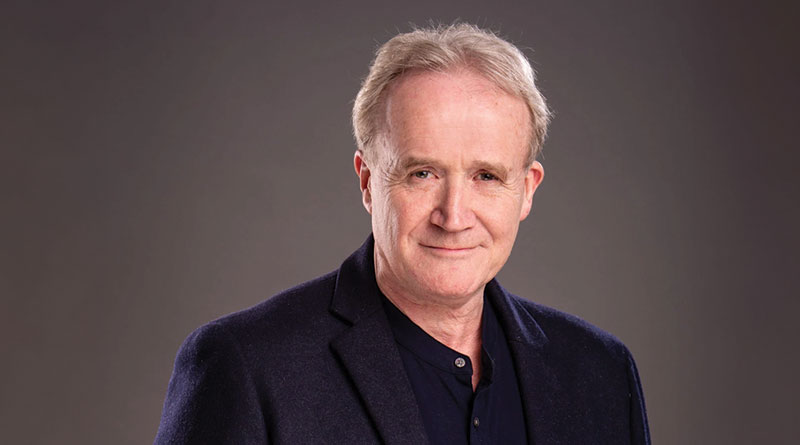
Mike Padgham, who owns and operates five care homes in North Yorkshire, is Executive Chairman of the St Cecilia’s Care Group and Honorary President of the Independent Care Group. He says the debate over social care reform must distinguish between excessive profits in parts of the market and the reality facing the majority of providers.
Mike’s comments follow concerns raised by Baroness Louise Casey, Chair of the Independent Commission into Adult Social Care, about large, often overseas-owned organisations ‘profiteering out of human misery and human life.’
Earlier this month Baroness Casey used a wide-ranging interview to take aim at the extent of privatisation within adult social care, accusing some private providers of profiteering at the expense of disabled people and the taxpayer.
Speaking to ITV News, she argued that handing large swathes of the sector over to profit-driven companies had been a mistake, and said she personally objected to firms making substantial profits from taxpayers, particularly from those with the highest care needs. Tracing the issue back to the 1980s, Casey pointed to a major shift in that decade when care provision was outsourced to the private sector without it being organised and managed, a move she believes was ultimately misguided.
Mr Padgham said: “I understand and share Baroness Casey’s concerns where some large organisations are making excessive profits, moving public money out of the country or using their market position to hold commissioners to ransom. But we must be very careful not to portray an entire sector as profiteering. The majority of social care in this country is being delivered responsibly and compassionately by organisations whose owners and staff are deeply committed to the people they support. Many are small and medium-sized, family-run businesses operating on extremely tight margins. They are not making excessive profits. In many cases, they are fighting simply to remain viable. I would like to meet the Baroness to discuss this, as we have ideas to make things work better.”
“Care-home fees can appear high when expressed as a weekly or annual figure, but they pay for a comprehensive, round-the-clock service. A care home operates 24 hours a day, seven days a week and 365 days a year. It must provide trained staff at all times, alongside accommodation, heating, lighting, meals, laundry, activities, equipment, maintenance, insurance, training, administration and extensive regulatory and safeguarding requirements. Staffing alone typically accounts for around 60% of a care home’s costs and can represent an even higher proportion in services supporting people with complex needs.”
Mike is launching his video campaign on deadline day for the first phase of Baroness Casey’s ‘Big Conversation on Care’ – the government-backed consultation asking the public “When we are old or disabled, or have a serious illness, who should support us and how?” to raise awareness and encourage public debate.
In the first video, Mike responds to Ann, whose relative lives in a Norfolk care home, who asks why fees of £1,000 to £1,200 a week seem so high. He explains: “over two thirds of that goes straight out of the door on staff wages. The rest is reinvestment, energy and utilities. To be registered with the CQC you have to make a small profit, so profit shouldn’t be a dirty word – but it’s very tiny compared to the rest.”
In another, Caroline asks whether it’s fair that dementia patients must pay for care that similar NHS-funded conditions wouldn’t require. Mike responds: “I don’t think it is fair. Dementia is treated as a ‘social need’ rather than a health need and that’s wrong. It should be provided on an NHS basis, not means tested – which is why I want the NHS and social care to come together under a National Care Service.”
More than 350,000 votes have been submitted to the Big Conversation since it launched in July, but Mr Padgham says families shouldn’t have to wait for the Commission’s full recommendations – not due until summer 2027 – to get straight answers. “I am concerned that is very close to a potential general election and the recommendations may never be implemented. We have been here before,” he says.
He goes on to say, “We all agree care workers deserve better pay, but we cannot call for higher wages while suggesting any increase in the cost of care is unjustified. For years, local authorities have failed to pay the true cost of care, leaving providers struggling with rising costs and creating an unfair market where self-funders pay more to compensate for inadequate public fees.”
The campaign follows Mike’s open letter to the Prime Minister last month, inviting Andy Burnham to visit one of his care homes – an invitation Mike says has gone unanswered. Mike has also invited Health Secretary Yvette Cooper to visit, to test the government’s commitment to reform.
Mr Padgham’s care home also featured in the 2021 BBC documentary Inside the Care Crisis, presented by Ed Balls. He says nothing has changed since, and no one from government has taken up his offer to visit.
Mr Padgham, who has run care homes in North Yorkshire for 37 years, added: “This imbalance was not created by the ordinary family care provider and it cannot be solved by blaming them. Quality is not guaranteed by whether an organisation is public, private or charitable – poor care and excellent care both exist across the sector.”
He said “Wholesale nationalisation would be costly and destabilising given the country’s reliance on independent providers”, calling instead for “a fair, transparent and properly funded mixed economy of care, with effective oversight to prevent excessive returns while ensuring responsible providers can survive and invest.”
“Morale across social care is already extremely low. Loose language that characterises the whole sector as profiteering risks driving away good providers and making recruitment even harder. It’s time for the difficult conversations we’ve been avoiding.”
The eight videos will run across social media over the next few months.
Mike says, “The public’s opportunity to take part in the current phase of the Big Conversation closes today. I urge everyone to take part before the deadline – any lasting settlement for social care must have the public’s understanding, involvement and support.”
Mr Padgham, who is campaigning nationally for social care, following three decades of work in the sector, says his video campaign is not a complaint, but a constructive offer of help – and a direct contribution to the conversation Baroness Casey is asking the country to have.
“This isn’t about one campaigner having a moan. It’s about the millions of people who need help right now and the people who care for them every day. We believe the Prime Minister will act if he says he will. We just want him and Yvette Cooper to see it for themselves.”
The scale of the problem
• Delayed discharges currently cost the taxpayer more than £2 billion a year, with 12,000 hospital beds occupied every day by patients who no longer need to be there, at a cost of £562 per bed per day (NHS England / Patient Safety Learning).
• The UK is predicted to need an extra 139,000 care home beds over the next decade (Savills).
• Self-funder care fees are rising by an average of 10%, while private operators now provide 87% of registered care home beds nationwide (Caring Britain Report).
• Baroness Casey’s independent commission on social care reform is not due to report in full until summer 2027, more than two years after the last general election (Gov.uk).
It comes as Unison warned the government’s immigration changes will deepen the staffing crisis in social care, publishing analysis, in August, of the latest industry employment figures showing the number of new international recruits hired into care jobs plunged from 105,000 in 2023/24 to 30,000 in 2025/26.
The union has written to Home Secretary, Shabana Mahmood, highlighting the situation and urging her to drop plans that would make it harder for migrant care staff to settle in the UK for good. The union is demanding she reverses plans to make international health and care staff wait 15 years before they can settle in the UK, instead of the current five.