
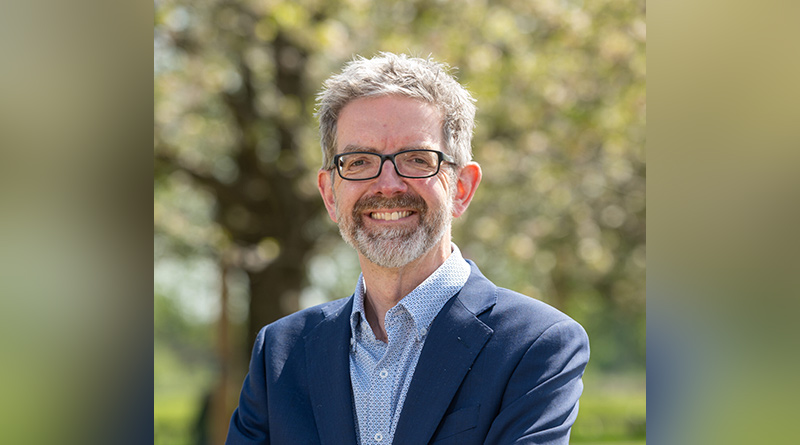
ADASS President Calls for Social Justice at Heart of Adult Social Care Reform
Phil Holmes, the newly appointed President of the Association of Directors of Adult Social Services (ADASS) has used his keynote address at the organisation’s annual Spring Seminar to place social justice firmly at the centre of the adult social care reform agenda, warning that progress without it will feel “meaningless and hollow”.
Speaking to an audience of adult social care leaders — including people drawing on care and support, council representatives from across the country, and senior figures from national partner organisations — the President opened by reflecting on ADASS’s work from the previous year, entitled Leading in Troubled Times.
That work, he explained, had been developed in response to narratives that appeared to pit disenfranchised groups against one another, as though wellbeing and success were a zero-sum game.
Delegates at the Seminar made clear that while they care deeply about adult social care, the Casey Commission, and neighbourhood health, it is social justice that matters to them most — and colleagues expressed that view with considerable force.
The President’s address took on added gravity in the wake of the recent attack in Golders Green, which he described as barbaric. He was unequivocal in stating that such incidents are not “senseless” but are, rather, the logical consequence of emboldened prejudice. Calling antisemitism racism plain and simple, he stressed that no anti-racism approach can be considered complete without a specific and determined focus on eradicating it.
He was equally clear, however, that the pursuit of social justice is not a competition between causes. Courageous leadership, he argued, must address antisemitism, Islamophobia, all forms of racism and religious persecution, the prejudice faced by trans people, the discrimination routinely experienced by older and disabled people, and the casual sexism — and worse — that women both working in and drawing on adult social care have long been expected to simply rise above.
The President acknowledged that the starting point for many is rage — in response to atrocity and intolerance — but argued that lasting change will only come through love, empathy, and a shared commitment to creating local, regional and national spaces where people can listen and act together.
He was candid about the limitations of statements alone, noting that declarations risk becoming little more than tick-box platitudes if they are not backed by meaningful action.
To that end, he outlined a minimum of three commitments ADASS intends to honour: clearly articulating the organisation’s position on social justice in its capacity as an independent charity; convening spaces for members to come together, share learning, and support one another — with forthcoming local council elections likely to provide further impetus; and remaining open to learning from the acts of courageous and inclusive leadership demonstrated by those working across the sector.