What Does It Feel Like To Deliver Care Today?
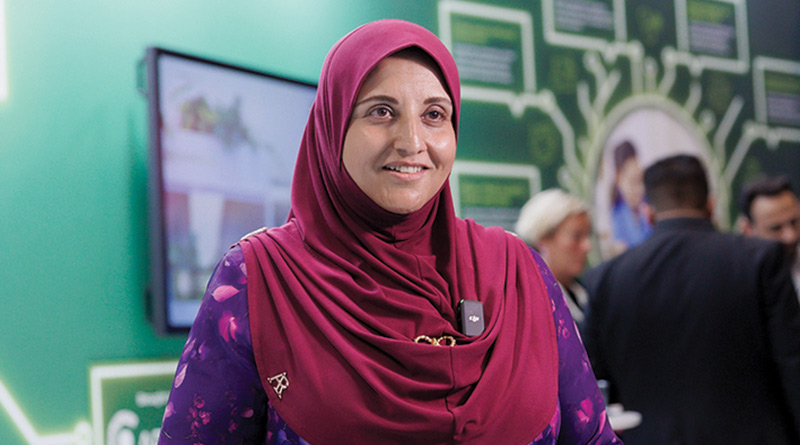
Neemat Sadiq, CEO of Langdale Care Homes, reflects on the tension between compassion and compliance, and how technology can restore time to care.
One of the greatest challenges in care today is not a lack of compassion. It is the constant tension between being present with people and being pulled into process.
I know this not as a CEO, but as someone who began as a carer.
I have walked those corridors. I have sat beside residents. I have felt the quiet conflict of wanting to give just a little more time, while knowing there is documentation waiting, charts to complete, records to update. That tension never really leaves you.
When I founded Langdale Care Homes, I believed I would be creating more space for care. In many ways I did, but like many business owners, I also found myself pulled further away from the very thing I loved most.
If you run a business, you will understand this. The work you once felt so connected to slowly becomes replaced with responsibility, compliance, and oversight.
In care, that shift comes at a cost.
For years, our teams were spending valuable time documenting care instead of delivering it. Not because they wanted to, but because they had to. Compliance demands it. Regulation requires it. And rightly so.
But somewhere along the way, the balance tipped too far.
Care began to feel like it was being recorded more than it was being experienced.
“Care began to feel like it was being recorded more than it was being experienced.”
That never sat right with me.
For over two decades, I have listened to carers, nurses, and managers. I have seen the fatigue that does not come from caring, but from the weight of administration that surrounds it. That kind of exhaustion does not serve our staff, and it certainly does not serve our residents.
There had to be a better way.
Empathika was born from that belief.
Not as a system, but as a response.
A response to the frustration of paperwork.
A response to the risk of human error.
A response to the quiet reality that too much time was being taken away from people.
We wanted to create something that worked with carers, not against them. Something that allowed documentation to happen naturally, in real time, without breaking the flow of care.
Today, with Empathika, information is recorded as care happens. Medication is managed more safely. Risks are identified earlier. And most importantly, our teams are given something incredibly valuable back.
Time.
And with time comes presence. With presence comes connection. And with connection comes better care.
“Technology is not here to replace care. It is here to protect it.”
But we must be clear about something.
Technology is not here to replace care. It is here to protect it.
This will always be a people first industry. No system can replace a reassuring voice, a held hand, or a moment of understanding. No app can comfort a family or respond to a resident calling out in the night.
What technology can do is remove the noise.
It can take away the repetitive, the time consuming, the burdens that sit around care and quietly drain those delivering it.
And when that happens, something shifts.
We have seen it in our own homes. Staff are more present, more energised, and more connected to why they came into care in the first place.
And when our teams feel better, our residents feel it too.
For me as a provider, it has also transformed compliance. What once took hours now takes minutes. Information is no longer chased. It is already there. That sense of readiness brings calm, confidence, and clarity across the organisation.
“This is not a loud transformation. It is a quiet revolution.”
This is not a loud transformation. It is not disruptive in the way people often expect.
It is a quiet revolution.
One that restores balance.
To those working in care, I would simply say this.
If you are exploring technology, do it with intention.
Not to monitor more.
Not to control more.
But to give back more.
Give back time.
Give back energy.
Give back the ability to be fully present.
Because at its heart, care has never been about systems.
It has always been about people.
And it always will be.
Neemat Sadiq
CEO, Langdale Care Homes
Founder, Empathika
www.empathika.com