
Social Care Sector’s ‘Transactional’ Training Is Fuelling Retention Crisis, Warns Expert
The UK adult social care sector is facing a severe workforce development crisis driven by outdated, ‘transactional’ training models, a national sector specialist has warned.
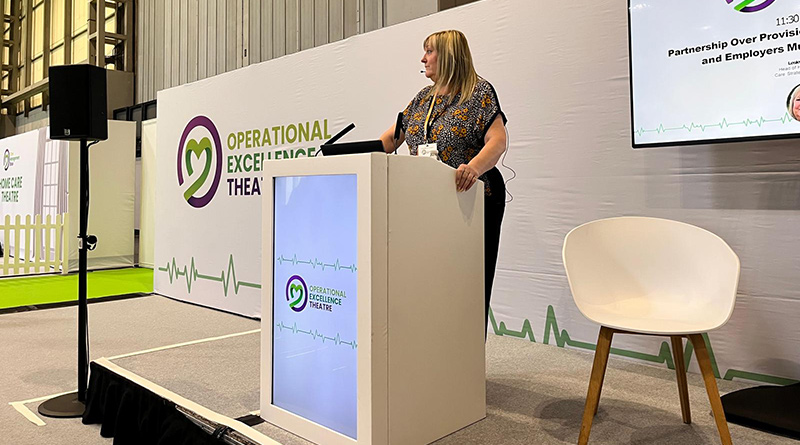
Speaking at the Care Management Show in Birmingham, Lesley O’Connor, Head of Strategic Development for Health and Social Care at training provider Realise, said that treating staff development as an administrative, box-ticking exercise is directly damaging staff retention and leaving workers unprepared for increasingly complex care demands.
She said: “A lot of training is still transactional: standard programmes, short-term focus, and limited alignment to actual job roles. And despite completely different workforce demands, we’re still seeing exactly the same training delivered across residential care, domiciliary care, mental health services and community-based care.”
Lesley revealed that a demographic cliff-edge is compounding the problem, with 50% of adult social care registered managers now aged 50 or older.
With 31% to 32% of these leaders projected to retire within the next 10 to 15 years, she issued a stark warning that providers expose themselves to ‘massive succession risks’ unless standard, off-the-shelf training provision is abandoned in favour of deep, co-designed employer partnerships.
The major flaw in the current system, she pointed out, is the systemic failure to connect educational delivery with actual workplace performance.
She said: “Training is still treated as a process, something that is merely delivered and evidenced. But if that training doesn’t change outcomes in the workplace, then it doesn’t add any real value.
“Are we really developing the health and social care workforce of the future, or are we merely getting better at delivering training?”
While the industry frequently attributes its operational stress to external market pressures, the internal strategy requires immediate scrutiny.
“We all recognise the pressures of hard to fill vacancies and staff retention, with the added factor of increasingly complex care needs,” Lesley added
“But what we’re hearing from the employers we work with is that this isn’t just a recruitment crisis, it’s a workforce development crisis.”
To break the cycle of high turnover, Realise – which works nationally supporting workforce development across the adult social care sector – advocates for a structural pivot away from generic ‘programme delivery’ towards deep operational collaboration.
In practice, this means giving staff a visible, clear future which in turn can transform retention.
“Because,” says Lesley, “when care workers see an explicit pathway for career progression, their likelihood of remaining with an employer increases dramatically.”
The sector can no longer afford to rely on incremental changes.
“If we continue to treat training as provision, we will continue to see the exact same challenges,” said Lesley.
“But if we move to true partnership, where providers and employers work together to build workforces rather than just deliver programmes, we have an opportunity to significantly change the future approach to workforce. Not incrementally, but meaningfully.”