NHS Partnership Sees Fairlie Healthcare Launch UK’s First Haemodialysis Service in Care Home
The first haemodialysis service to be offered in a care home setting has been established in London, thanks to a provider partnership with the NHS.
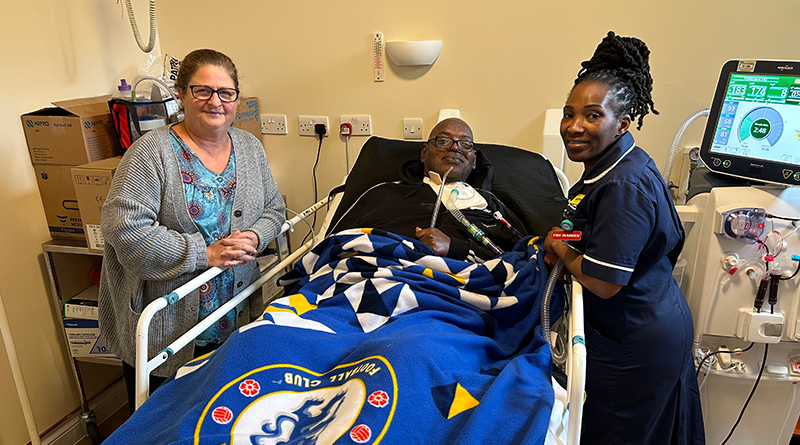
Fairlie Healthcare, which provides specialist nursing care to people living with complex neurological conditions, spent more than 12 months working closely with the renal team at King’s College Hospital NHS Foundation Trust to set up the service at Fairlie House, its 45-bed home in West Norwood specialising in tracheostomy and NIV care.
The initiative has been spearheaded by Fairlie Healthcare’s Director of Clinical Services, Ben Payne, and Kunaal Kharbanda, Consultant Nephrologist at King’s with support from Bromley SEL ICB. The project represents a major step forward in delivering advanced hospital-level clinical care within a community environment.
“This exemplifies what can be achieved when organisations work together towards a shared goal — providing truly person-centred, safe, and specialist care in the community,” said Ben. “We’re incredibly proud to be part of a UK-first initiative that is improving lives and redefining what’s possible in complex care.”
The service was orchestrated following more than a year of collaborative planning and innovation to enable a safe and effective discharge for David Prescod who had been living on the intensive care ward at King’s. David has end-stage renal failure and lives with long-term tracheostomy and ventilation support following a stroke.
Kunaal Kharbanda said; “Haemodialysis treatment is a huge undertaking for patients. For most, travelling to hospital 2-3 times a week is time-consuming and associated with a poor patient experience. We are seeing rising complexity in the patients we treat and for this group, transport poses an even greater challenge. David’s case highlights what joined-up working can achieve – he now receives his dialysis treatment at home, in an environment that delivers excellent care, with a team he trusts and without the need for travel.
“The NHS needs to continue driving innovation in how care is delivered, with a further shift from the hospital to the community. David’s story shows just how successful that shift can be.”
Eliminating the need to transfer David to hospital for dialysis twice a week with a specialist doctor and nurse lessens the impact on resources and also means that David can spend more time focused on his progress.
The home has recently taken possession of a second haemodialysis machine, doubling its capacity to facilitate discharges, improve patient wellbeing and reduce integrated care costs.
“As a provider caring for those with some of the most complex needs, we continue to drive innovation and collaborate with the sector to develop new clinical admission pathways to support complex discharges,” added Ben. “We have a slow stream rehabilitation pathway for step down and longer term placements and we are looking to develop new pathways spinal injuries, brain injuries and complex enteral feeding.”