New PM Signals Tax Rises May Be Needed To Fund National Care Service
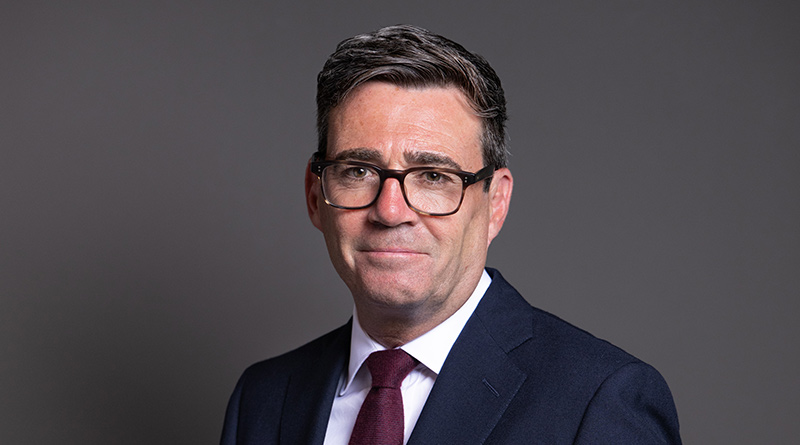
Andy Burnham has used his first days in Downing Street to reopen the debate over how a national care service for England should be funded, suggesting that tax increases may be unavoidable if the government is to deliver a system that matches the ambitions long championed by care sector campaigners.
Speaking shortly after taking office, the new Prime Minister said the country needed an honest, public-facing debate about the cost of caring for an ageing population, and admitted that decades of political inaction on the issue reflected badly on his own generation of politicians.
Cost of inaction laid bare
Independent analysis from the Health Foundation has put the price tag of bringing social care up to an NHS-style standard at close to £18.7 billion a year by 2035 — a figure that underlines the scale of the challenge facing the new administration.
Burnham, who served as Health Secretary under Gordon Brown, once floated scrapping inheritance tax in favour of a flat 10 per cent levy on all estates at death, a plan that was shelved in 2009 following fierce criticism from opponents who branded it a “death tax”.
Asked whether that idea remained on the table, he indicated his thinking on care funding had evolved since then, while stressing that the financial strain the current system places on the NHS — through delayed discharges and unnecessarily long hospital stays — now runs into billions of pounds and cannot be ignored in any future settlement.
Casey review brought forward
The Prime Minister has inherited the independent commission led by Baroness Louise Casey, originally established by the previous government, and has asked for her final recommendations to be delivered this year rather than in 2028 as first planned.
Alongside that work, Baroness Casey is launching a nationwide listening exercise — dubbed the “Big Conversation” — to gather public views on four central questions: who should be entitled to receive care, what reasonable expectations families should have of one another, what support the state should guarantee, and what contribution individuals should be expected to make in return.
Levy on estates still favoured
Treasury figures show inheritance tax currently raises close to £9 billion a year, while social care spending is on course to reach £39 billion by the end of the decade — a gap that has fuelled renewed interest in alternative funding models.
Despite the setback in 2009, Burnham has continued to signal support for some form of care levy on estates.
During the recent Makerfield by-election campaign, he indicated he was prepared to examine how such a levy might interact with inheritance tax and existing care charging rules, saying he would not shy away from the issue. He has previously suggested the model could be adjusted so that those with greater wealth contribute proportionally more, replacing inheritance tax with a broader levy paid by all but weighted towards higher earners.
“Political capital” pledge
The Prime Minister has said he is willing to spend significant political capital on reforming social care, arguing that the country can no longer afford to delay difficult decisions simply because they are unpopular. He pointed to the growing phenomenon of “corridor care” in hospitals, warning that the strain of delayed transfers of care was making it increasingly difficult for the NHS to meet accident and emergency waiting time targets.
Burnham, whose own father lives with Alzheimer’s, said he did not want to leave office without having reformed a system he described as indefensible, pointing to the number of families who have lost homes and life savings paying for care under the current arrangements.
Wider tax reform floated
Beyond social care funding specifically, Burnham has previously backed the introduction of a land value tax that could eventually replace council tax or stamp duty, and allies have pushed for capital gains tax to be aligned with income tax rates — a move they argue could raise around £14 billion a year, although official Treasury modelling has suggested such a change could instead reduce overall revenue.
For care providers and operators watching from the sector, the coming months of the Casey review and the promised “Big Conversation” are likely to prove decisive in shaping the long-term funding settlement the sector has been awaiting for years.