
146-Year-Old Social Care Charity Rebrands as The Do Good Charity
One of the UK’s longest-established social care charities has unveiled a new identity and an ambitious strategy to increase its impact across communities nationwide.
Saint John of God Hospitaller Services (SJOG), which has worked in the UK since 1880, but traces its roots to 1539, has become The Do Good Charity – a name designed to make its purpose clearer and help the organisation reach more people, partners and communities.
The charity currently supports more than 1,800 people every month across 60 communities, providing housing, care and specialist support for disabled and autistic people, people with complex needs and older people. It employs 562 colleagues. Its digital services supported more than 97,000 people during 2025.
The rebrand coincides with the launch of a strategy to 2030 built around three commitments: Do Good, Do More Good and Do It Well.
Under the strategy, The Do Good Charity plans to deepen its work within communities, increase housing and support for disabled people and people with complex needs, and expand support for people as they age.
It also intends to strengthen collaboration across the voluntary sector, working with charities and community organisations to share expertise, space and resources.
Plans include increasing training available to third-sector organisations, providing shared working spaces for organisations doing good in their communities and developing ‘The Do Good Consultancy’, which offers training and turnaround support alongside its Goodness Metric, a tool designed to help organisations understand and demonstrate their impact.
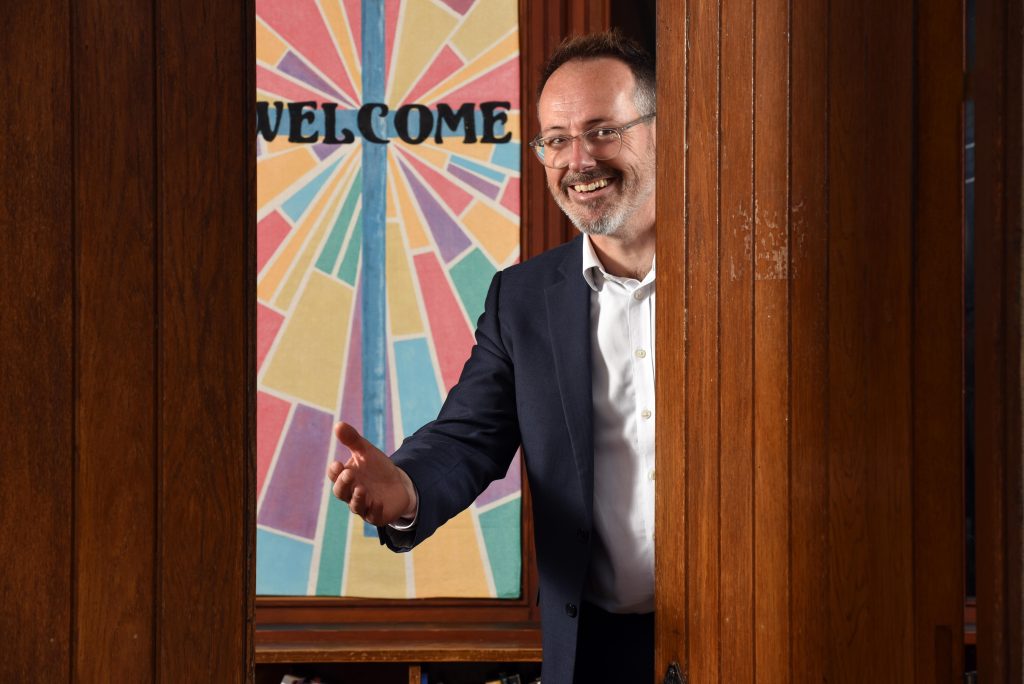
Paul Bott, Chief Executive of The Do Good Charity, said: “It’s a new name, but the same heart since 1880. The 500-year-old philosophy of hospitality is still the bedrock of our work.
“We’re still delivering on our purpose, working creatively with the person in front of us. Every day we say, come on in, you are most welcome, how can we help.”
The charity traces its heritage back to the 16th century and Saint John of God, whose radical approach to caring for poor and sick people placed dignity, compassion and hospitality at its heart.
The religious order that grew from his work became known in Italy as the Fatebenefratelli – the “Do Good Brothers”.
Until now, the UK charity says it has deliberately adopted the quiet approach of its founders and delivered its work rather than actively promoting its name.
But its new strategy marks a shift in ambition.
Paul said: “SJOG was familiar to the people who already knew us, but it did not necessarily tell someone encountering us for the first time who we were or what we stood for.
“The Do Good Charity does exactly that. It puts our purpose into plain English and, importantly, it is also an invitation. We’ve been quietly doing good since 1880. Now we need people to know who we are because we want to do more of it. We want more people, communities, charities, supporters and partners to work with us so that together we can do more.”
The charity points to its ‘Here to Help’ suicide prevention programme as an example of the type of work it wants to expand.
Launched in 2024 to address gaps in mental health and suicide-prevention support for autistic people, Here to Help directly assisted over 2,000 individuals, including autistic adults and family members via tailored workshops, drop-ins, and community engagement, but trained 1730 professionals, including volunteers from the Samaritans on supporting autistic callers in crisis.
Quality of care will remain a central focus of the growth strategy. For the fifth consecutive year, 100% of The Do Good Charity’s CQC-regulated services were rated Good or Outstanding across all areas.
Paul added: “We are proud to have a history stretching back centuries, but this is very much about what comes next.
“Our ambition is not simply to grow for the sake of being bigger. We want to increase our impact – reaching more people, building stronger communities and helping more people to live well, with dignity and opportunity.
“After more than 140 years in the UK, this is the next chapter in our story.”