
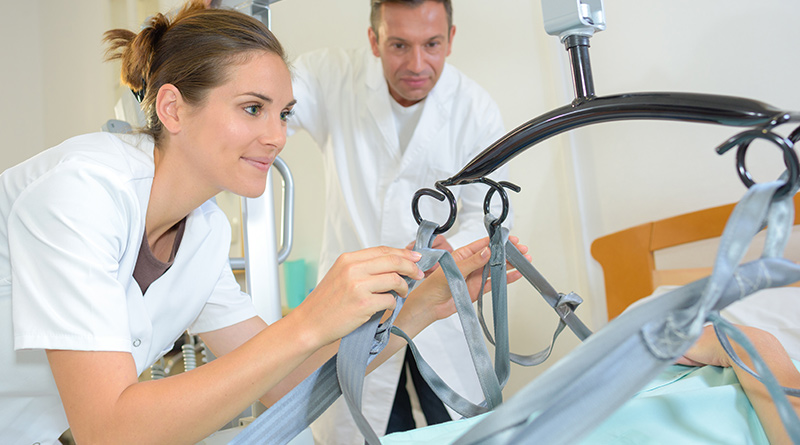
MHRA Issues Hoist Safety Alert Following “Serious Issue” Concerns
Care providers have been requested to strengthen checks, maintenance and staff training for patient hoists and slings after the medicines’ regulator The Medicines and Healthcare products Regulatory Agency (MHRA) warned that preventable falls continue to cause fatalities and serious injuries across health and social care settings.
The MHRA issued a National Patient Safety Alert (NatPSA) to support the safe use of patient hoists and slings across health and social care settings.
Patient hoists are widely used to help transfer people with reduced mobility safely and comfortably in hospitals, care homes and in the community, including in people’s own homes.
While these devices play a critical role in care the MHRA said, a review of recent safety data has shown that serious incidents can occur when they are not used, checked or maintained properly. The regulator said that between January 1 2015 and December 31 2025, it received 22 reports of incidents with a fatal outcome during patient transfers.
These incidents are not linked to any single manufacturer or model and have been reported across a range of care settings, including hospitals, care homes and people’s own homes.
This alert aims to reinforce good practice and raise awareness of steps that can help reduce risks during routine transfers.
Dr Alison Cave, MHRA Chief Safety Officer, said: “Patient hoists are vital devices that support safe and dignified care, but when they are used incorrectly or not properly maintained, the consequences can be devastating.
“Ensuring patients are safe during transfers and repositioning is our top priority.
“Our alert sets out clear actions to help prevent avoidable harm. We are urging healthcare providers, carers and anyone using a hoist to follow this guidance carefully and ensure equipment is safe before every use.”
The MHRA has set out urgent and practical steps that healthcare organisations and care providers to minimise risks, including:
Following extensive pre-use checks before every transfer
Making sure the hoist and sling are compatible and using the correct equipment for each patient
Confirming all attachments are secure before lifting
Keeping maintenance records and ensuring equipment is regularly inspected, serviced and is compliant with regulations
Ensuring all staff and caregivers are up to date with training and competency assessments.
Anyone who experiences a problem with a medical device, including patient hoists or slings, should report it directly to the MHRA Yellow Card scheme.