
Government Urged to Recognise Rural Health Delivery Costs
A new report calls for greater recognition of the complexity and costs of neighbourhood health planning in county and rural areas, and finds that county and unitary councils are the ‘crucial layer’ in shaping local health plans.
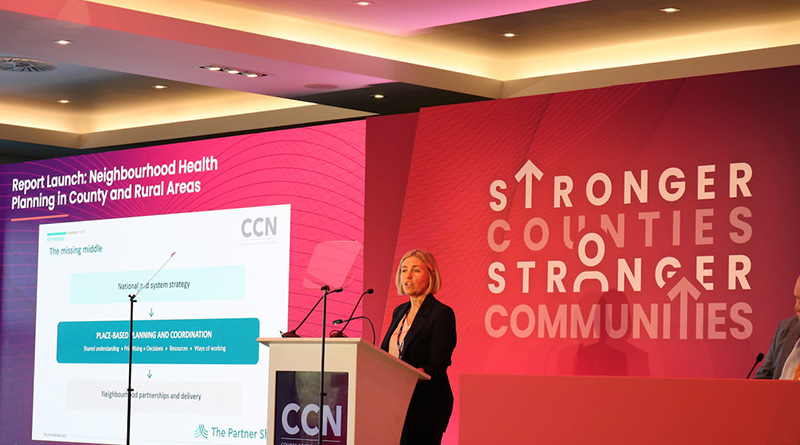
The research, The Patchwork Quilt: Making neighbourhood health planning work in county, rural and coastal areas, is being launched at the County Councils Network’s (CCN) Annual Conference 2026 today. It examines neighbourhood health approaches across England’s county and rural areas, featuring case studies throughout.
The report finds that county and rural areas contain unique and diverse populations, geographies, infrastructure, workforces, and care markets. It argues that urban-centric policies – such as a focus on Neighbourhood Health Centres – may not be feasible in county and rural areas.
Whilst the report showcases good practice from CCN members across the country, it argues this progress could be built upon if national policy and funding accounted for county and rural realities in planning neighbourhood health.
It calls on the government to ensure funding settlements and allocations fairly reflect the costs of planning and delivering neighbourhood health in rural and coastal areas, including the increased costs associated with distance, travel times, work force pressures and dispersed services.
The government has allocated £50m to the first phase of its Neighbourhood Health Centre programme, with the majority of this distributed to city or urban-based provision. The CCN is calling for a parallel investment into realising the opportunities of neighbourhood health in rural areas, through mechanisms such as hub and spoke arrangements, mobile units and outreach, digital provision, and bolstering third sector infrastructure.
Whilst efforts to transform local healthcare into more community-orientated approaches have been underway for decades, the agenda has had a renewed focus due to the NHS 10 Year Health Plan prioritising care closer to home.
But CCN’s report warns against this impetus from the centre leading to a one-size-fits-all approach to neighbourhood health, arguing that ‘one size fits no one’.
The research calls for councils to be at the forefront of shaping local plans. It argues that neighbourhood health is their ‘core business’, with upper-tier authorities having responsibility for public health, children’s services and adult social care, as well as the wider determinants of health, such as public transport and housing.
Based on an examination of existing planning for neighbourhood health, the report concludes that the most effective approaches depend on closer collaboration between the NHS, councils and local partners, and have three essential ingredients: relationships, governance, and resource.
The research argues that county and unitary councils are the ‘missing middle’ in shaping neighbourhood health. They have the size to convene health leaders, commission services, and implement national reforms whilst having the local knowledge to be able to work with communities and organisations on the ground.
County and rural councils are the ones who can ensure local priorities influence how resources and support are organised over large and diverse counties.
The report finds the place-shaping role of county and rural unitary councils to be a ‘crucial layer’ between system-wide decisions made at national level and communities at a local level.
However, the drive for increasing neighbourhood health comes at a time when local government and health are undergoing reorganisation in many county areas. Changes to council and Integrated Care Board boundaries can leave local authorities and their partners stripped of resource, having to rebuild relationships, navigate new boundaries, and establish new governance arrangements. The report finds that local government reorganisation complicates the picture further, with significant risks including disaggregation of services, disrupted relationships, and further losses to the place-shaping layer.
There are several recommendations for national policymakers to try and expand neighbourhood health in county and rural areas, including incorporating greater flexibility – and a recognition of rural realities – in national guidance and ensuring that outcome frameworks can be tailored to local areas, rather than proscribed nationally.
Cllr Bill Revans, Adult Social Care and Health Spokesperson for the County Councils Network, said: “This report highlights some of the effective neighbourhood health planning that is taking place in county areas up and down the country, delivering better local services and ensuring we have healthier communities. In the context of the NHS 10 Year Health Plan, this report is a timely assessment of what approaches are working, what can be improved upon, and how we can navigate changing structures as public services are reformed.
“The report is clear that improved neighbourhood health cannot be achieved by the NHS alone. Councils must be at the heart of efforts and in county and rural areas, county and unitary authorities are the crucial layer between translating national policy and funding into actual improvements on the ground, tailored to local place. They are big enough to convene and organise health partners, and local enough to understand and work with different communities.
“But for all the good work outlined in this study, county and rural unitary councils across the country report significant financial pressures. If we want to build on what are very solid foundations, then government needs to recognise that neighbourhood health planning in county and rural areas is distinct to planning in metropolitan areas: and provide an adequate response that fairly reflects the costs of delivering the agenda’s promises of better care, stronger communities and healthier lives.”